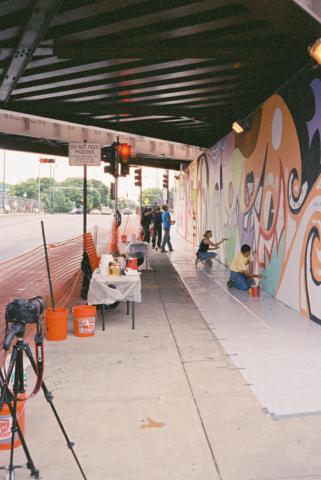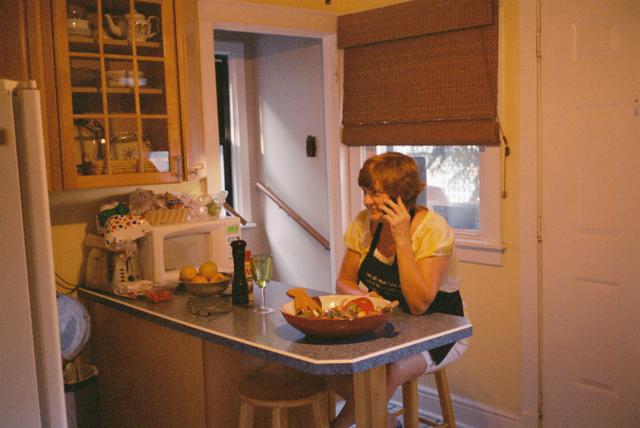
Digital or film photos, which one is better?

I am not a purist, I shoot with both digital and film cameras.  But the question needs to be asked?

Are film cameras better than digital?

Can you tell the difference between 35mm film or digital photos?

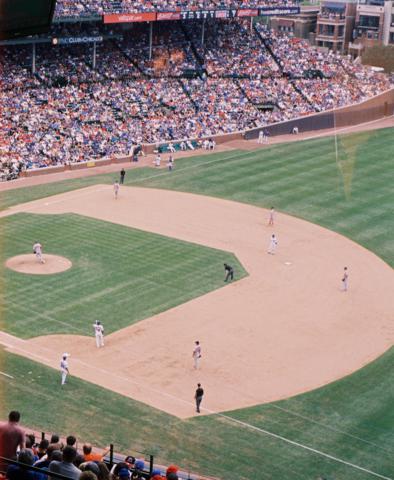
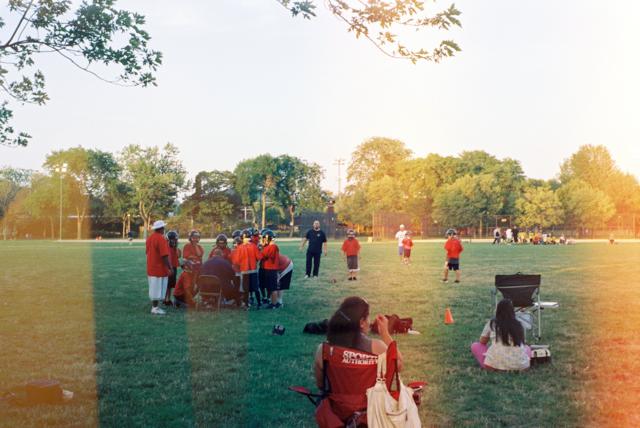
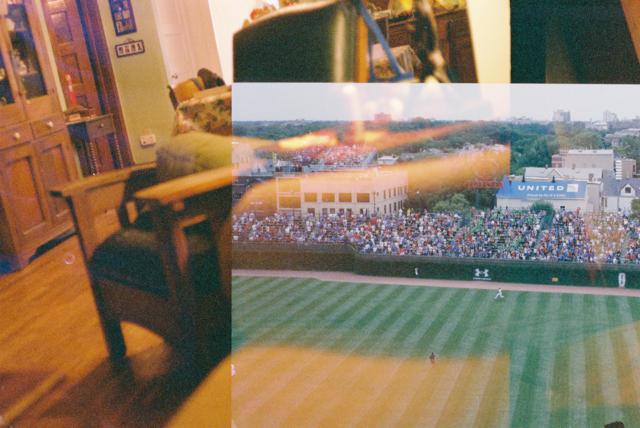
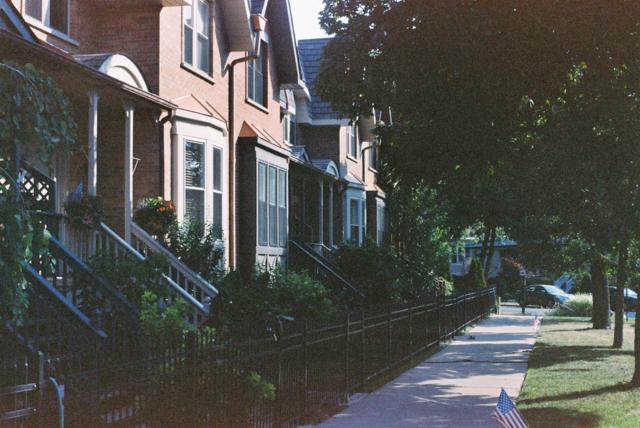
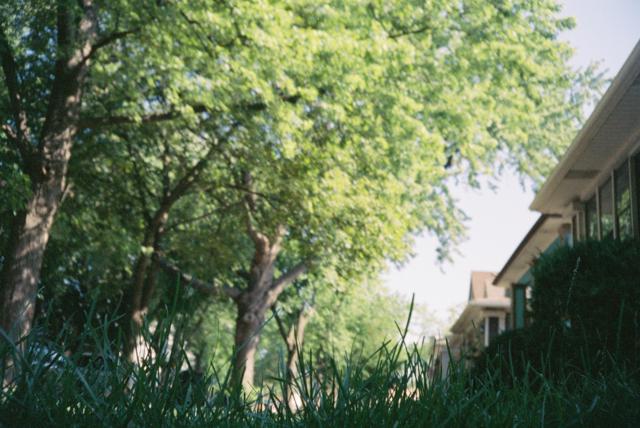
You decide.  Choose your favorite picture.  Then research the camera I used for that photo.  Some photos were taken with 20-50 year old film cameras, one was taken with a five year old digital camera.  Can you tell the difference?

Pond 1

Pond 1

Pond 2

Pond 5

It’s not the Camera, it’s the Photographer

When we are a bit young and foolish we convince ourselves that a better camera will make us a better photographer.  And better cameras normally mean spending more money.  I experienced this camera envy in my early 20′s on a college school trip to Russia.

I remember my camera envy sitting with my tent partner Ron Janssen (where are you Ron?).  He owned a Praktica SLR and I owned a Kodak Instamatic camera.  Talk about camera envy.

I never saw Ron’s Praktica SLR photos.  The name Praktica stayed with me for decades until I purchased a few Prakticas of my own.  But I took some decent photos with my Kodak Instamatic, not great but decent.

Sometimes, it’s the Camera not the Photographer

I own over 75 cameras.  But some of these cameras ranging from a $5 Kodak Motormatic to a $30 Yashica T4 (worth $300) can be very special.  Sometimes, a camera with an amazing lens and light metering system can just knock you over with rendition of colors and textures.

So let’s take a look at a few of my shots of a pond in Mount Prospect, IL, USA, on different days.  These are some of my best landscape photos.

Kodak Motormatic, Five Dollars

This was purchased for five dollars on eBay with a few other cameras.  It took a while to learn how to use it.  It has a wind-up motor drive like some toy from the early 1960′s.  And I was unsure of the metering system.

But here’s my photo of my Mount Prospect pond.  I know it’s not a great photo but it’s a very good photo for a camera from the early 1960′s.  I was especially impressed with the blue texture of the pond.  I think this was of the very first times I realized an inexpensive camera could take a good photo.

Kodak Motormatic 35, Mount Prospect, IL Pond

Kodak Motormatic 35, Mount Prospect, IL Pond

Canon A35F, Five Dollars

I described this 5 dollar garage sale purchase and nicknamed it Son of Canonet.  Here’s my Canon A35F review for later reference.

Here’s another fine shot of the Mount Prospect, IL pond.  The bright sky tricked the light meter a bit but I can see the lateral lines of algae (?) running left to right near the right side of the frame.

Canon A35F, Beautiful Pond, Mount Prospect, IL

Canon A35F, Beautiful Pond, Mount Prospect, IL

Canon QL17, $120 Re-furbished

The Canon QL17 rangefinder can take some wonderful shots.  This photo may be my best ever of the Mount Prospect, IL, pond.

Canon QL17, Beautiful Pond, Mount Prospect, IL

Canon QL17, Beautiful Pond, Mount Prospect, IL

Visit my Canon QL17 review for more details on this camera.

Canon SD880 IS, $110 Camera

Even though I love shooting with film cameras I always keep my Canon SD880 IS as backup.  Ken Rockwell’s writeup on the Canon SD880 persuaded me to purchase it.  Absolutely a wonderful digital camera at an affordable price.  It has the equivalent of a 28mm lens that ranges to 4x zoom.  It’s always in my camera bag along with my film camera of the day.

This photo of the Mount Prospect pond was taken with the Canon SD880.

Canon SD880, Pond in Mount Prospect

Canon SD880, Pond in Mount Prospect

Yashica T4, $250 camera purchased for $30

This is the near legendary point and shoot camera with the Zeiss lens.  I found it on Craigslist one early morning for $30 and drove 10 miles to purchase it immediately.

It has a Carl Zeiss Tessar lens but what I like most about the photo below is the excellent light metering.  In many photos, a bright blue sky will trick the camera into metering badly.  But the Yashica T4 below performed wonderfully.

Yashica T4, Beautiful Pond, Mount Prospect, IL

Yashica T4, Beautiful Pond, Mount Prospect, IL

Digital or film photos?  Use what you enjoy.

Nothing magical here.  It was nice of you to play along and read my blog post today.

Are digital images better than film photos?  Are the old film cameras really better than digital?  Did the Canon SD880 digital photo seem that much better than film cameras ranging in price from $5 to $250 and ranging in age from 10 to 40 years in age?

You get to decide.  As for me, I’m glad I can always shoot with both digital cameras and film cameras in my camera bag.

Thanks for visiting What is a Film Camera today.
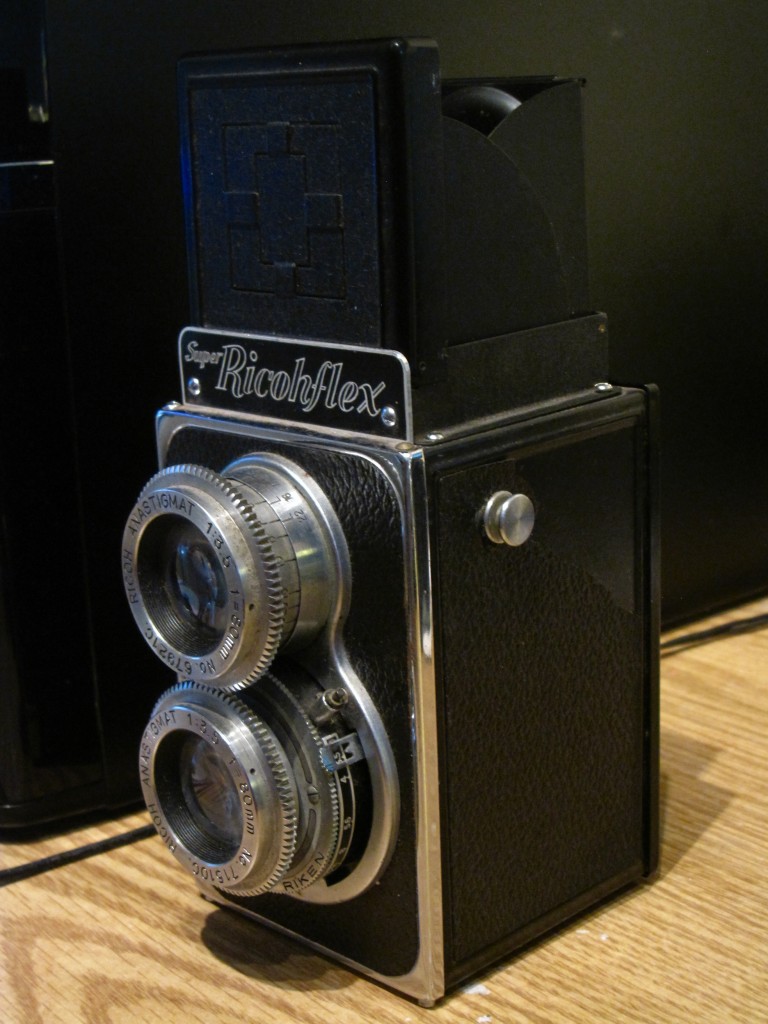
Minolta SRT 100 Review

I like the feel of this 35-40 year old Minolta SLR.  But then I’m a big fan of Japanese SLRs from the 1960′s and 1970′s as you can read from my Canon QL17 review and my Canon FTb review.  But today I’m writing about my durable Minolta SRT 100 with its 50mm 1.7 Rokkor lens, purchased in March/April of 2012.

Minolta SRT 100, Front View

Minolta SRT 100, Front View

Without repairs, with just a new battery and ASA 200 speed film, this camera went a perfect 24 for 24 for one roll of film.  Every exposure came out well metered and decent.  All the photos with this Minolta SRT 100 were taken on overcast days, perhaps that helped the metering system.

Minolta SRT 100, Grace and Kostner, Chicago, IL

Minolta SRT 100, Grace and Kostner, Chicago, IL

But the Rokkor files thinks the Minolta SRT 100 is a stripped down camera compared to other Minoltas in the SRT line.  They have a wonderful website but I’ll beg to differ on their opinion on the Minolta SRT 100.  If I had purchased this Minolta between 1970 and 1975 it would have been a purchase of a “stripped down” SRT Minolta.  But since I found and purchased this Minolta SRT 100 that works with just a new battery after 40 years, I’d say it was a good purchase.

This is another purchase from a quirky antique shop on Chicago’s far north side.  Sorry, I’m not giving its name away.  But let’s just say you can find several antique shops on North Broadway as you go north of Foster in Chicago, IL.  I purchased this camera for $20 and considered it a fair price for a Minolta SRT 100 that worked fine in the store plus a 50mm 1.7 Rokkor lens.

Initial Impressions on my Minolta SRT 100 Camera, Quirky Battery Cover

It’s fun having a slightly better knowledge of used 35mm film cameras than I did one or two years ago.  This is what I learned about the Minolta SRT 100 in the antique store.

  1. Lens.  I found this camera with a MC Rokkor-PF, 1.7 50mm lens.  Clear filter included with a scratch free and fungus free lens.
  2. Body.  At the time of purchase I thought the body was in good shape.  The bottom of the cameras has a few scratches which are common for cameras without cases.
  3. Shutter speeds.  I tested all shutter speeds in the store and they all sounded accurate and worked.  If you purchase a camera with shutter speeds that don’t work, it’s a problem camera.  Some old SLRs have trouble with their lower speeds.  Again, this Minolta SRT 100 was fine in the store.
  4. Aperture.  I opened up the back of the camera, pointed the camera to the artificial lights, adjusted the aperture, and tested different aperture sizes to see if they were working.  Tested OK.
  5. Film advance.  I opened the back of the camera and fired the shutter several times.  The film advance mechanism seemed to be working properly.
  6. View finder.  Small debris or tiny black pieces in the viewfinder.  I decided I could live with that defect.
  7. Battery chamber.  No battery but at least the battery chamber was in good shape, no sign of battery acid.  The battery chamber is on the left side by the rewind crank.
  8. Mirror foam.  There is a piece of foam that absorbs the shock of the mirror when it flips after depressing the shutter button.  This foam was badly degraded.  In the long term this meant a repair, in the short term it would be OK.
  9. QUIRKY BATTERY COVER.  Before you can examine the battery chamber you will need to remove it.  Using a coin to unscrew the battery cover won’t help you.  The battery cover is a cover at the bottom of the camera with two tiny holes at zero degrees and 180 degrees.  A strong tweezers may help you unscrew the battery cover but I use a Hi-Tech 1421 device I purchased at an auto store.  It’s called a snap ring pliers.  One reader commented that he uses his thumb to unscrew the battery cover.  Sometimes you need more than your thumb.
Minolta SRT 100, Bottom with Snap Ring Pliers

Minolta SRT 100, Bottom with Snap Ring Pliers

I love the solidity of the 1960′s and 1970′s Japanese cameras.  I offered $20 to the clerk, she texted the owner, and the owner texted back to take the offer.

Minolta SRT 100 Review - Technical Details

I know that visitors want specs, but I’m not a spec kind of guy.  Neither am I willing to steal somebody else’s work off the Internet.  So if you want terrific detail on specifications go to the Butkus manuals.  But for now, here are my simple technical details.

  1. Produced.  Production started in 1971.
  2. Camera type.  35mm SLR.
  3. Lens mount.  Minolta bayonet mount.
  4. Shutter.  B and 1 second to 1/500 of a second.
  5. Film Speed Scale.  ASA 6-6400.
  6. Exposure Meter.  Through the lens metering system.  Match needle meter through the viewfinder.

When I purchased this camera it felt good in my hands.  But then, I haven’t met a Japanese SLR from the 1960′s or 1970′s that didn’t feel well made.  It’s very heavy with its 50mm lens.

Provenance or History

I prefer purchasing cameras at garage sales or even on Craigslist where I can learn something about my new, old camera.  But no history on this camera.  I admit it, I sometimes feel a little sad for cameras sold without a history.

Wouldn’t it be more fun knowing who owned a camera, where the camera has been, and even some of the old photos of a camera?  But this Minolta SRT 100 comes to me without a history.

I enjoy reading the Photography Review articles on the cameras I own.  But the Minolta SRT series had only 8 reviews at Photography Review.  It’s a bit voyeuristic reading how much people have loved their old cameras on websites (I guess that’s part of what I do also).

My Repairs for the Minolta SRT 100, One Needed

No immediate repairs needed, thankfully.

If I decide to use this camera frequently, I will need to repair the degraded foam inside the camera that absorbs the shock of the SLR mirror after each shot.  But for one roll of film, it’s OK.  Below, look to the right of the Minolta logo and the lens mount, you will see a vertical piece of foam that is worn and degraded.

Minolta SRT 100, Degraded Mirror Slap Foam

Minolta SRT 100, Degraded Mirror Slap Foam

Minolta SRT 100 Battery

This is another mercury battery you can’t purchase in the United States anymore.  I hear rumors that you can buy mercury camera batteries in Canada.

Try a 1.35 volt zinc-air battery to replace the mercury battery used in the Minolta SRT 100.  Or better still, consider purchasing a light meter.  Luckily, my 1.35 volt zinc-air battery works on my Canon QL17, my Canon FTb, and finally my Minolta SRT 100.

How does the Minolta SRT 100 feel?

Historically, this camera was not considered professional grade.  But if you find a Minolta SRT 100 that works fine without repair, it will seem “professional” enough to you.  Purchasing old 35mm film cameras is all about personal ROI.  What is the personal satisfaction and Return On Investment that an older camera brings to the new owner.

Nice features of the Minolta SRT 100.

    1. Solid, and heavy.  Yes, I’ve used that phrase before to describe other cameras.  But for a 30 minute walk in Chicago I don’t mind having the Minolta SRT 100 over my shoulder.  Hiking with my camera bag, Minolta SRT 100, two lenses, and light meter is a different story.  That would be very heavy.
    2. Feels good.  Yes, it feels good when you shoot it.  It felt very solid as a mechanical device.
    3. Half Stop Lens.  The Rokkor lens I had seems to have a “half stop” aperture feature.  I can adjust the aperture half way between f16 and f8 while the light meter responds to those changes.  I like that feature and wish other old lenses had the same feature.

Match needle metering

    .  I like match needle metering much more than the LED light metering of some of my other cameras.  If the “needle” is within the “circle” in the viewfinder, the camera thinks you have the correct exposure.

Problems?  Yes.

  1. Battery problem.  This camera was built around a mercury battery.  That’s now against the law in the United States.  Finding a replacement that gives you the same voltage will be a problem.  But perhaps finding the correct battery is worth it to use this camera.  This seems to be the correct replacement for the mercury battery, this is a Wein MRB625 1.35v Zinc-Air battery.
  2. Loading film.  After testing two cameras in a row that had the the Canon QL film load system (see my Canon QL17 review and my Canon FTb review) I had to re-learn the old fashioned film load method of the Minolta.  I found a very old test roll of film, loaded it into the Minolta SRT 100, and shot 24 exposures.  During the process, the film rewind mechanism was advancing with every shot (a good sign the film is engaged and advancing).  Then I rewound the film 3/4 to doubly check that the film transport had worked properly.  I removed the expired film and loaded my good film with the belief that film transport for this Minolta SRT 100 worked fine.

Minolta SRT 100 Sample Photos on North Milwaukee, Chicago, IL

In April 2012 on a rainy afternoon, I took a stroll north to south from Milwaukee and Addison (Schurz High School) to Milwaukee and Belmont (Federico Garcia Lorca Elementary School), Chicago, IL.  Although not great photos, I’m pleased to say every photo I took in the rain with this 35-50 year old Minolta SRT 100 was exposed properly.

Schurz High School, Chicago, IL

The north end of my walk is anchored by Schurz High School.  I’ve taken many photos of Schurz over the years.  Today I took my Schurz High School photo with the old video store in the foreground.  Now there’s graffiti on the vacant store.  Years ago it was a busy hot dog stand.

Minolta SRT 100, Schurz High School and Empty Store

Minolta SRT 100, Schurz High School and Empty Store

The Quickee Mart

That’s not their real name, that’s what we call it.

Sadly I photographed the Quickee mart one day after it was the scene of an upcoming movie (Superman?  Spiderman?).  Yesterday, the Quickee mart had huge film trucks on its tiny lot, a tent for a barbeque, and lots of activity.  Today it’s returned to its normal self, one short block from Schurz High School.

Minolta SRT 100, North Milwaukee Quickee Mart, Chicago

A Dash of Prosperity on North Milwaukee Avenue, Chicago, IL

This cell phone store has been busy and profitable for years.

Minolta SRT 100, Prosperous Mobile Phone Store

Minolta SRT 100, Prosperous Mobile Phone Store

This car wash is busy all the time.

Minolta SRT 100, Prosperous Car Wash, Chicago, IL

Prosperous and Wonderful La Oaxaqueña Restaurant

Here’s the prosperous and highly regarded La Oaxaquena restaurant at 3382 N. Milwaukee Ave, Chicago, IL.  It has a four star rating out of five stars with 91 reviews on Yelp.  It may look tiny from the outside (green sign) but it has lots of room inside.  Give them a try if you’re in the neighborhood.

Minolta SRT 100, La Oaxaqueña, Chicago, IL

Minolta SRT 100, La Oaxaqueña, Chicago, IL

Recession Condos

Yes there has been a recession, no there are no condos in the next picture.  I call the photo “recession condos” because the vacant lot now awaits development in some near future.

Just before the crash of 2008 and its aftermath, this half block of land was cleared on the 3400 block of North Milwaukee, Chicago, IL.  For now, the block and its weeds is fenced in awaiting a turnaround in the economy.

Minolta SRT 100, North Milwaukee Recession Condos, Chicago, IL

Minolta SRT 100, North Milwaukee Recession Condos, Chicago, IL

I’ve often thought I could do a film expose on America’s post-recession of 2011 and 2012.

Hope on 3200 North Milwaukee:  Federico Garcia Lorca Elementary School

At the south end of my walk today on the 3200 N. block of Milwaukee you’ll find the almost new Federico Garcia  Lorca Elementary School.  It’s a beautiful grade school.  Here’s hoping this southern, educational anchor for the 3200 – 3500 blocks of North Milwaukee Avenue is a beginning of good things to come for the neighborhood.

Minolta SRT 100, Federico Garcia Lorca Elementary School, Chicago, IL

Minolta SRT 100, Federico Garcia Lorca Elementary School, Chicago, IL

Minolta SRT 100 Review - Summary

This Minolta SRT 100 was a good purchase for $20 plus a three dollar battery.  24 out of 24 exposures on my ASA 200 speed film came out fine.

Canon and Nikon cameras are snatched up quickly at garage sales and small antique stores.  Owning a used Minolta may not excite the younger generation.  But if you’re a young (or older) film student trying to learn photography, the Minolta SRT 100 would be a good place to start.  Again, let’s close with a stroll through Kilbourn Park in Chicago, IL on a rainy day (and remember to curb your dog).

Minolta SRT 100, Kilbourn Park, Chicago, IL

Minolta SRT 100, Kilbourn Park, Chicago, IL

Thanks for reading my Minolta SRT 100 review today.  If you find an affordable and operational Minolta SRT 100 for $20 and a Rokkor lens, it’s a fair price for a good, old SLR camera.

Thanks for visiting What is a Film Camera today.
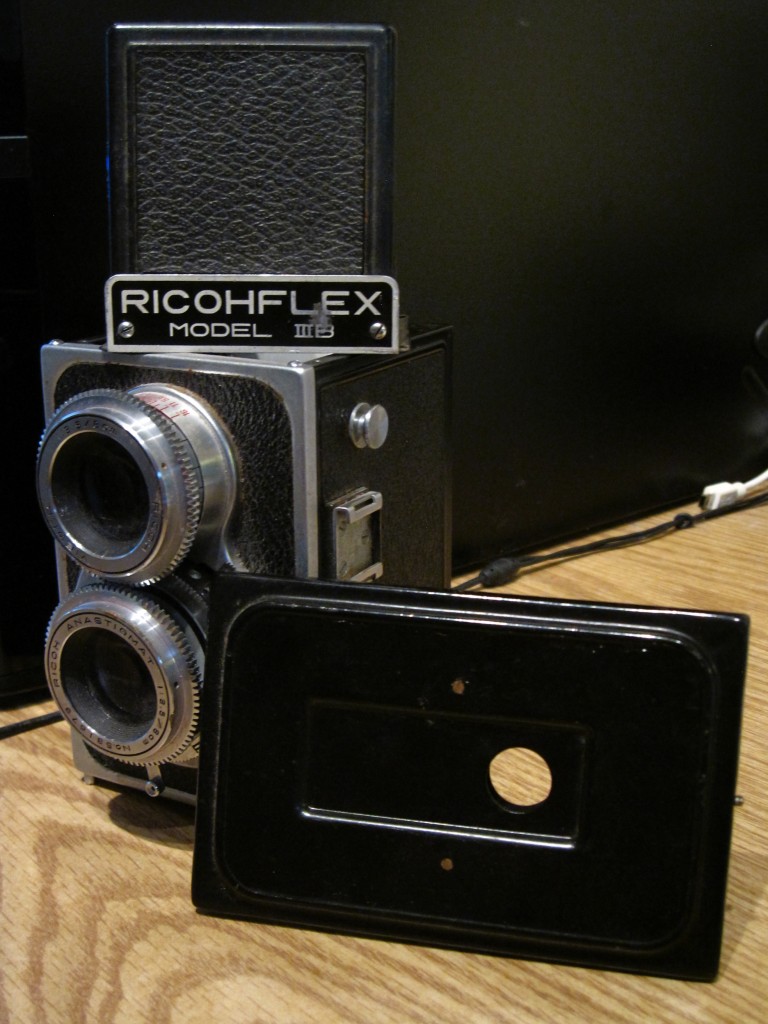
Canon QL17 Review – My Camera from Saigon

This will be a longer post, a very long post.  But if you enjoy a good story about a fine old camera, sit back and enjoy my blog article today about a 40+ year old Canon QL17 from Saigon.

Canon QL 17, Saigon, in Case

Canon QL 17, Saigon, in Case

I was always mad at myself for failing to even make an eBay bid on a Vietnam war photographer’s camera, an SRT 101.  Then almost by accident, I acquired a Canon QL17 camera from Saigon, Vietnam.

I was curious when I saw 3 cameras sold on eBay for parts.  One of the cameras was a Canon QL17 and it looked relatively clean.  In the closing minutes I bid a whopping 5 dollars maximum in hopes of winning a decent camera.  I won the auction and purchased 3 cameras for $2.50 plus shipping.

They arrived in the email.  The three cameras were a Honeywell Spotmatic with 1.9 50mm Vivitar lens, a strange Aka Relle scremount lens camera, and a Canon QL17.  I checked out the Spotmatic (undependable shutter at slow speeds but decent otherwise).  The Aka Relle camera seems to have problems with its film advance.  Sometimes it works if you jiggle a lever, sometimes it doesn’t work.  Then I examined the Canon QL17 last.  I wanted to savor the Canon QL17.

Initial Impressions of my Canon QL17

The Canon QL17 was clean.  Body clean, lens clean, battery chamber clean.  Popped the film back open and it even looked as if someone tried to put new seals into the camera.

  1. Lens.  This Canon rangefinder comes with a 1.7 45mm lens.  No scratches or fingerprints.  It also came without a filter so it’s perhaps a small miracle its traveled 40 years without being scratched or harmed.
  2. Body.  When this eBay purchase arrived, the body looked good.  Upon further examination, it’s almost new.  On old cameras you will normally find scratches on the bottom of the camera, no scratches.
  3. Shutter speeds.  The shutter clicks but the shutter diaphragm doesn’t open.  That normally means their too much accumulated oil on the diaphragm.  But upon arrival, I couldn’t say for sure if the shutter speeds were working correctly.
  4. Aperture.  Again, the shutter diaphragm doesn’t open so even if I set different apertures, I can’t determine if its working.  On an SLR you can adjust the aperture of a lens and determine if it’s “kind of” working.  With a rangefinder you cannot.  This shutter diaphragm has “oil”.
  5. Film advance.  A Canon QL camera has a great method for loading film.  The QL or Quick Loading system is an easier method for loading film.  A spring tensioned plate pressures your film when you close the back of the camera.  Trust me, it’s just easier to load.
  6. View finder.  YellowishEverything was a bit yellow when I looked through the viewfinder.
  7. Battery chamber.  No battery but at least the battery chamber was in good shape, no sign of battery acid.
  8. Light meter.  The camera’s light meter came to life with a new battery.  Whether it’s accurate or not I cannot say.  I’ll shoot a roll of film to test it.

This camera cost less than a dollar on eBay.  Actually it cost 42 cents plus shipping.  Total price was about $5.35 with shipping included.

Provenance – My Canon QL17 came from Saigon, Vietnam

I was half interested in repairing the camera (or more correctly, paying someone to repair it) and then I noticed something.  Like a lot of older cameras, this camera had a shoulder strap with an empty film canister attached to the strap.  The film canister was marked “Saigon, Vietnam”.  The story of this camera became clear.  I can’t prove it but I believe this camera was made in Japan around 1970 and then sold in Saigon, Vietnam.  Most likely, very most likely, an American serviceman purchased this camera in Saigon and photographed the world that he saw in southeast Asia during the Vietnam War.

I will never know who really owned this camera.  But here is this camera’s known journey.

  1. Made in Japan.
  2. Purchased most likely in Saigon, Vietnam during the Vietnam War.  It would be very unlikely for someone to purchase a camera in California with a strap that had a film canister marked “Saigon, Vietnam”.
  3. Valley Springs, California.  I purchased the camera on eBay from a vendor in California.
  4. Chicago, IL.  This is the Canon QL17′s new home.

A Side Trip to Des Plaines, IL

Once I learned (or believed I learned) that my Canon QL17 traveled through Saigon, Vietnam, I decided to take it to Lee’s Camera Repair in Des Plaines, IL, for a repair estimate.  The following Saturday I drove from Chicago past Park Ridge into Des Plaines and showed my camera to Mr. Lee.  He is a man of few words.

He looked at the camera and said, “Oil.”  Now the camera is at his shop in Des Plaines, IL, getting a CLA (clean, lube, and adjustment) for $60.  He’ll clean up the cloudy viewfinder and clean the “oil” off the blades.  He was so excited looking at my camera that he moved faster than I’ve ever seen him almost jumping to his batteries on the wall to find a battery and test the camera’s meter.

I think Mr. Lee liked my camera.

The last time Mr. Lee fixed one of my cameras it was a Yashica 1000 that couldn’t advance film.  His workmanship on my Yashica 1000 was glorious.

Special Thanks to my Wife

My bride of over 25 years thought $60 was a bit much to repair a camera.  I agreed.  Without her, collecting cameras would be pointless.  Honey, thanks for my birthday gift.

I Own Three Canon QL Cameras

I own three of these cameras:  The Reconditioned Canon QL, the Mt. Pulaski $10 special, and the $1 Canon QL from Saigon, Vietnam.

My First Canon QL17

I purchased a CLA’d Canon QL17 from a camera store two years ago.  I only shot one roll of film with it even though it cost me $125 during the summer of 2010.  When I realized I was spending too much on cameras I paid $20 a week on the camera in an effort to slow down my purchases.  Well, it slowed me down a little.  Here is a dazzling photo from my 1st Canon QL17 (not the Saigon camera).

Canon QL 17, Pond Reflections at Dusk

Canon QL 17, Pond Reflections at Dusk

The Mount Pulaski Canon QL17

The Mount Pulaski Canon QL17 was purchased during the summer of 2011 at a garage sale in that tiny town in central Illinois (by the way, I love Mt. Pulaski).  Let’s just say my wife was driving with me when she said, “Turn here by the brick homes.”  I found one garage sale and they had no cameras.  But I asked if they had a camera inside.  They disappeared into the house and returned with a very warm camera case marked Canon that must have been in the attic.  I told them if fixed up and tested, it might sell for $75 on eBay.  I offered $10 and they accepted my offer (I think they liked me).

The Vietnam Canon QL17

On March 23, 2012 towards the end of an eBay auction I saw 3 cameras on sale for one dollar.  They were being sold for parts.  From this photo I decided it was a Canon QL17.  Sorry, it’s not a great photo.

eBay Trio

eBay Trio

I bid a whopping $5 but won the auction with a bid of $1.25.  My Vietnam Canon QL17 was purchased for 42 cents.  If you count the shipping, the camera cost about $5.35.  And now…the camera is back from Lee’s Camera Repair of Des Plaines, IL and its beautiful.

Mr. Lee’s Camera Repair of Des Plaines, IL – My 40 Year Old Camera is Like New

This Friday at work someone called my phone.  It was an Asian woman asking for “Richie”.  Then I realized, it’s Lee’s Camera Repair.  She was calling to say my camera was ready.

In Friday’s evening rush hour I drove from Oakbrook Terrace, IL to Des Plaines, IL just to pick up a 40 year old camera.  When I arrived it was only the elderly Asian lady (Mrs. Lee?) in the store.  I walked into the store, said hello, said my name was “Ritchie”.  She turned away, told the barking dog to be quiet, and found my camera.

  1. Viewfinder?  As clear as it was 40 years ago.
  2. Oily diaphragm shutter?  The shutter worked perfectly.  I can only believe Mr. Lee removed the oil.
  3. New seals?  The original Canon QL17 used tiny foam.  Mr. Lee used some type of thick, twisted thread in the tiny crevices of the camera.  I have read the German Praktica cameras used that technique.
  4. Battery?  Mr. Lee had tossed in a battery for free.  The meter worked just fine and responded to light.

I purchased a $5 clear filter to protect the lens while I was in the shop.  I told the elderly Asian lady the camera was a birthday gift for me.  She smiled and I said good-bye.

Canon QL17 Review - Technical Details

I know that visitors want specs, but I’m not a spec kind of guy.  Neither am I willing to steal somebody else’s work off the Internet.  So if you want terrific detail on specifications go to the Butkus manuals.  But for now, here are my simple technical details.

  1. Produced.  Production began March, 1965.
  2. Camera type.  35mm rangefinder.
  3. Lens.  45mm, f/1.7.
  4. Shutter.  B and 1 second to 1/500 of a second.
  5. Film Speed Scale.  ASA 25-400.
  6. Exposure Meter.  Built in using CdS photocell with shutter priority.
  7. Film Loading.  The wonderful Canon QL (Quick Loading) method for loading film.  You will enjoy it.

My Repairs for the Canon QL17

As described before, this camera had three known faults after close inspection.

  1. Oil on the shutter diaphragm caused the shutter to malfunction.  You cannot take a film photo unless the “eye” of the camera dilates to let light into the camera.
  2. Yellowish viewfinder.
  3. Interior seals on the camera were crumbling a bit.

$60 to Mr. Lee of Lee’s Camera in Des Plaines, IL repaired the camera.  Thanks Mr. Lee.

Canon QL17 Battery

This is another mercury battery you can’t purchase in the United States anymore.  I hear rumors that you can buy mercury camera batteries in Canada.

Try a 1.35 volt zinc-air battery to replace the mercury battery used in the Canon QL17.  Or better still, consider purchasing a light meter.

How does the Canon QL17 feel?

This is a heavy camera.  I find putting the strap around my neck with the camera in front of my chest.  I support the camera with one hand as I walk along.  It’s hard to imagine if a U.S. soldier carried this in his backpack.  But I’m glad it’s mine, glad I had it repaired.

Nice features of the Canon QL17.

  1. Solid and heavy.  Yes, I’ve used that phrase before to describe other cameras.  But for a 30 minute walk in Chicago I don’t mind carrying the Canon QL17.  But you’ll need to love this camera to carry it long distances.
  2. Feels good.  Yes, it feels good when you shoot it.  It is incredibly quiet. 
  3. Canon QL.  I had to learn how to load film all over again when I took up film cameras after a two decade hiatus.  But the Canon QL (Quick Loading) contraption makes a lot of sense.  The film almost loads itself.

Problems?  Yes.

  1. Battery problem.  This camera was built around a mercury battery.  That’s now against the law in the United States.  Finding a replacement that gives you the same voltage will be a problem.  But perhaps finding the correct battery is worth it to use this fine camera.  This seems to be the correct replacement for the mercury battery, this is a Wein MRB625 1.35v Zinc-Air battery.
  2. Focusing.  I normally shoot at the infinity setting but when trying to focus at shorter distances (a flower, perhaps’s someone’s face), I wasn’t quite convinced I had focused correctly.  I tend to shoot at smaller apertures like F16 in hopes of getting depth of field and minimizing any focusing problems I might experience.  I also found myself using the feet estimator as I focused.
  3. Big Lens in Viewfinder.  I began noticing that in the viewfinder I was seeing the big lens.  Not a problem for me, perhaps an aesthetic problem for you.

Good or bad?  In automatic mode you see the aperture in the viewfinder, not the shutter speed.  If you’re like me, you’ll use the automatic metering and not realize you’re taking a 1/4 of a second shutter speed shot in early evening.  Normally you don’t dare take many shots at 1/15 much less 1/4 of a second.  But there’s very little camera shake with this Canon QL17.  We’ll see if my hand held shots at 1/4 come out nicely.

Canon QL17 Sample Photos from Starved Rock State Park, Illinois

For my birthday my wife and I stayed at the Starved Rock State Park in Illinois.  Naturally I took my birthday present with me:  a newly CLA’d Canon QL17.  We visited Utica, IL, Starved Rock State Park, Matthiessen State Park, and Ottawa, IL.

Starved Rock is an Illinois State Park located across the river from Utica, IL.  Here’s a good scenic view from Starved Rock itself overlooking the Illinois River.  I especially like the fishing boat near the bottom right hand corner.

Canon QL 17 Saigon, Best Starved Rock Landscape Photo

Canon QL 17 Saigon, Best Starved Rock Landscape Photo

I loaded ASA 200 speed color film into the Canon rangefinder at Duffy’s Tavern in Utica, IL.  Dawn the waitress came over to admire the old camera.  Always nice making friends with old cameras.But something was wrong with my film loading.  It didn’t “feel” right as I advanced it.  It wasn’t smooth like my other Canon rangefinders.  In the dark shade of a trail in Starved Rock State Park I re-loaded the film.  Sure enough, the film wasn’t loaded correctly the first time.  The second time I think I succeeded in loading the film properly.

This Canon rangefinder is very quiet in use and has very little camera shake.  That’s why I dared to take this photo at night of a lighted bridge at night by the Starved Rock Lodge.  I used my Gossen Digisix to meter the darkness and took my photo.  Considering its hand held at night with ASA 200 speed film, I think it came out decently.

Canon QL 17 Saigon, Woman at Starved Rock at Night

Canon QL 17 Saigon, Woman at Starved Rock at Night


Canon QL17 Review - Summary

The first Canon QL17 was produced in 1965.   Potentially my new yet old camera may be 47 years old.  You can visit its “official” write-up at the Canon Camera Museum.

This camera has had an epic journey from Japan to Vietnam to California, USA to Chicago, IL, USA.  And now this camera has had a long, “epic” blog post.

Canon QL 17, Saigon, without Case

Canon QL 17, Saigon, without Case

Although I like the history of this camera I am not sure I would make this my “go to” rangefinder.  It is especially heavy.  And, you will find that trying to focus properly at mid-range objects with this camera may be difficult.  This camera may be best for photos with the lens set to infinity.  Shoot landscapes happily but don’t count on this camera for great family portraits.

Thanks for reading my Canon QL17 review today.  In this blog post I described a Canon QL17 camera from Saigon, Vietnam.  More importantly, for the U.S. serviceman who I believe once owned this camera, “Thank you for your service.”

Thanks for visiting What is a Film Camera today.
Rollei Prego 90 Review

Rollei Prego 90 Review – Clunky Style, Good Lens

Do you want a good design function, a great lens, or both in a point and shoot camera?  The design form of the Rollei Prego 90 is so clunky it makes you wonder if it was designed by a committee of 2nd string German engineers (hey, I’m German-American, I can say that) following orders from some Marketing Department.

But the photos can be wonderful.

Rollei Prego 90, Lake Geneva Dock

Rollei Prego 90, Lake Geneva Dock

Three Rolls so Far

I purchased the Rollei Prego 90 long distance via Craigslist for $30 a few years ago.  I read somewhere
that it was a fine point and shoot so I bought it.  After all, it was a Rollei camera, correct?

I shot my first roll of film in a Chicago cemetery at a family ceremony.  This was before I was organized with my film negatives and CD.  Some of those photos remain.  Photos taken at high noon on a summer day rarely come out nicely.  Sorry, I don’t own a scanner yet for scanning film photos and digitizing my photos.

I shot the second roll in the summertime of 2011 at Lake Geneva, Wisconsin and some of the photos were dazzling.  The panoramic switch on this camera is a lot of fun.

Rollei Prego 90, Panoramic - Lake Geneva, Wisconsin, Boats

Rollei Prego 90, Panoramic – Lake Geneva, Wisconsin, Boats

The third roll was shot in and around Chicago, IL in a warm March of 2012.  Nothing fancy, just a
subdivision near Oak Brook, IL.  But I took some hand held shots at night with the Rollei Prego 90 without a tripod.  To my pleasant surprise, the Rollei Prego 90 took fine photos at night in Chicago with ASA 200 speed film.  And I didn’t even need a tripod.

I just learned that this camera has a “fuzzy” mode.  It minimizes fuzzy photos when taking shots in dark locations.  I wish I had known that for the photo shown below of the Irving Avenue CTA stop viaduct in Chicago, IL.

Rollei Prego 90, Irving Ave Viaduct, Chicago, IL

Rollei Prego 90, Irving Ave Viaduct, Chicago, IL

But those gosh darn photos are pretty good.  In fact, some people rave about the Rollei Prego 90 point and shoot camera at Photography Review.  A 4.49 out of 5 rating with 35 ratings is very good.  That’s probably why I purchased it.  I’m sure its Rollei lineage also was a factor in my purchasing the camera.

One reviewer from Singapore said all he uses is a Yashica T4 and his Rollei Prego 90 for photography.  I guess I would qualify, I own both those cameras.

Initial Impressions on my Rollei Prego 90 Camera

In some ways, point and shoot cameras are harder to assess than good old fashioned heavy, metal SLRs and rangefinders.  You can physically examine a point and shoot camera but you don’t know what it can do until you invest $10 into a battery (or less) and start testing the camera.

  1. Lens.  Thankfully, the lens was clean and without the usual fingerprints you find on old point and shoot cameras.
  2. Body.  No scratches or chips.  It’s in fine shape.
  3. Shutter speeds.  You can’t test shutter speeds on a point and shoot.  They either work with the battery or they don’t.
  4. Aperture.  I normally open up the back of a camera, point the camera to the artificial lights, adjust the aperture, and tested different aperture sizes to see if they were working.  I don’t know of any way to test the different apertures of a point and shoot camera.  Insert battery and a roll of film and shoot a test roll.
  5. Film advance.  You can test film advance on a point and shoot.  Purchase a battery and insert an expired roll of film.  Shoot 24 times and hope the roll of film auto rewinds.  This camera worked.  But other point and shoot cameras fail the film advance test.  Read my Canon Sure Shot 120 review to learn how a point and shoot camera can fail the film advance test.
  6. View finder.  The view finder was clear although incredibly hard to use.  I found myself squinting immediately when using it.
  7. Battery chamber.  The battery chamber was clean, just difficult to open.  You will need a paper clip to open the battery chamber.

The Rollei Prego 90 was what I expected it to be at first glance.  It was clunky in size and had too many controls or features.  The real reason people purchase this camera is for the quality of the lens and the photos.  You can only appreciate the camera by using it.

Rollei Prego 90 Review - Technical Details

I know that visitors want specs, but I’m not a spec kind of guy.  Neither am I willing to steal somebody else’s work off the Internet.  So if you want terrific detail on specifications go to the Butkus manuals.  But for now, here are my simple technical details.

  1. Produced.  These cameras were produced in the mid 1990′s.
  2. Camera type.  Point and shoot (actually, more like a think first, point, think again, then shoot).
  3. Lens.  28mm to 90 mm Schneider-Kreutznach lens.
  4. Shutter.  Automatically selected from 1/3 to 1/400th of a second.  B exposures of up to 60 seconds possible.
  5. Film Speed Scale.  ASA 50-3200.
  6. Exposure Meter.  Normally automatic depending on what modes or flash you choose on the top of the camera.  Back light compensation is possible although not easy to learn.
  7. Film Loading.  This all assumes you have a battery in the camera.  Drop the film into the back of the camera.  Extend the tip to the area marked “film tip”.  Close the film door.  The film advances correctly.

If you’re serious about using this camera, you can read the Rollei Prego 90 manual thanks to an M. Butkus of New Jersey.  Consider paying him a small “thank you” fee for his good work.

Provenance or History

I prefer purchasing cameras at garage sales or even on Craigslist where I can learn something about my new, old camera.  But no history on this camera.  Absolutely none.  All I remember is that my Rollei Prego 90 came from a distant Craigslist purchase from the East coast of the U.S.  It cost me $30 plus postage.

My Repairs for the Rollei Prego 90, None

No repairs needed, thankfully.  I have trouble enough making minor repairs to my SLRs and rangefinders.  Just glad this point and shoot worked as soon as I opened the package.

How does the Rollei Prego 90 feel?

It’s clumsy.  But the photos are above average.

It’s too big, it conveniently fits into nothing.  It feels solid in a plastic sort of way.  It seems to jerk a little
bit when you press the electronic shutter.  It can drive you a little nuts trying to figure out its features.

Nice features of the Rollei Prego 90.

  1. Solid, but not horribly heavy.  Yes, I’ve used that phrase before to describe other cameras.  But for a 30 minute walk in Chicago I don’t mind having the Canon FTb over my shoulder.  Hiking with my camera bag, Canon FTb, two lenses, and light meter is a different story, that’s heavy.
  2. The lens.  It comes with a 28-90 mm lens made by Schneider-Kreutznach.  This fine lens makes up for a lot of negatives regarding this camera.
  3. Panoramic switch.  This camera has a panoramic switch which grows on you after a while.
Rollei Prego 90, Panoramic - Soccer Game

Rollei Prego 90, Panoramic – Soccer Game

Problems with the Rollei Prego 90?  Yes.

  1. Feels clunky.   At least a nice heavy metal camera can feel good in your hands.  Or, a plastic point and shoot like my Olympus mju would feel tiny yet capable.  The Rollei Prego 90 is an odd design that’s just stuck in the middle between heavy metal and small, plastic efficiency.  Sorry, it just feels clunky.
  2. Viewfinder.  The viewfinder seems tiny and is unpleasant to use.  I find myself squinting a lot.  Your eye needs to be in perfect position to use the viewfinder.
  3. Extensive features.  There are so many features to this camera you will need to read the manual.  If you just want to point and shoot with this camera, it will get the job done.  To really utilize this camera you need to study its functionality.  Do you like reading German manuals?
  4. Battery replacement.  This is perhaps the strangest battery replacement method I’ve seen.  You need a paper clip to poke in a hole to pry/pop open the battery chamber.  On the bottom of the camera you will see the instructions, “Unlock with pin.”  Awkward.

Rollei Prego 90 Sample Photos

The Rollei Prego 90 isn’t magical.  It’s a point and shoot camera but you need to be thoughtful when taking your photos.  Here are a few more photos I’ve taken with my Rollei Prego 90.

I purposely took this photo wondering how the camera would address the brightness of the sky with the trees on the distant shore.  I was purposely testing the camera’s auto exposure capability.  It clearly demonstrates that the brightness of the sky overwhelmed the metering.  The trees and the pond were my greatest interest and they are underexposed.  The camera does have an exposure compensation method, but you may need a degree from a German engineering school to understand that feature (and others).

Rollei Prego 90, Pond and Sky, Underexposed

Rollei Prego 90, Pond and Sky, Underexposed

Here’s a simple photo of me at work.  My camera friend and colleague Mickey took the photograph.  You can see my water bottle, blue Weight Watcher book, and my Rollei Prego 90 gray case on my desk.  You want to be able to give your camera to someone else with an expectation that a photo will come out correctly.

Rollei Prego 90, Dad at Work

Rollei Prego 90, Dad at Work

Rollei Prego 90 Review - Summary

Yes, the Rollei Prego 90 is clunky point and shoot camera that yields very good photos with a fine lens.  But I’m in no hurry to sell my Rollei Prego 90 to anyone.  And the manual for the camera will give you headaches.  You can read the Rollei Prego 90 manual thanks to an M. Butkus of New Jersey.  Consider paying him a few bucks if you use his manual.  (I just paid him $3.00 via PayPal.)

Is the Rollei Prego 90 my favorite point and shoot camera?  No, it’s not.  My favorite point and shoot is the underrated Canon 130u.  (And yes, I own a Yashica T4, Olympus Stylus Epic, and the Rollei Prego 90.)

As I wrote this blog article I kept remembering awkward/quirky things about this camera (viewfinder, battery replacement, etc.)  But when you study this Rollei point and shoot and learn how to use it, it takes some very nice photos.  This is a hard camera to learn and a hard camera to sell to others:  the photos make it worth keeping this camera in your collection.

Rollei Prego 90, A Walk by the Pond

Rollei Prego 90, A Walk by the Pond

Thanks for reading my Rollei Prego 90 review today.  If you can find the Rollei Prego 90 for an affordable price at a garage sale, buy one.  It will reward you with some wonderful photos.

Thanks for visiting What is a Film Camera today.
 

Canon FTb Review – A Fifteen Dollar Beauty

I just had my Canon FTb photos developed and I am delighted with the outcome.  Wonderful photos in my opinion for a 40 year old camera.

Canon FTB

Canon FTB

My daughter and I meet for Sunday breakfasts every now and then and on this day I metered and focused on her and then gave the Canon FTb to her.  She took my photo (I am proudly wearing a Carnegie Mellon University baseball hat).

Canon FTb, Claire's Portrait of Dad

Canon FTb, Claire’s Portrait of Dad

I had to purchase this rock solid Canon FTb at a quirky antique shop on Chicago’s far north side.  I knew it was worth a solid $25, the teen-age clerk texted the distant owner for a price on the camera with its 50mm lens, and the owner said sell it for $15.

I tried to persuade Michelle behind the register to purchase it for $15 dollars.  It was a bargain.  She declined (she said she had too many projects going on).  So I purchased it.

I own 70 cameras (35 untested).  So why did I purchase it?  It’s a fine camera oozing with old school quality from 3 to 4 decades ago.  Also, I believe we all need to spend some money in antique shops to keep these great little places alive.

So what did I get for $15 dollars this chilly January 21, 2012?

Initial Impressions on my Canon FTb Camera

Now that I have actually purchased and used various film cameras, I actually know how to determine if a camera is decent before purchasing it.  This is what I learned about the Canon FTb in the antique store.

  1. Lens.  I found this camera with a Canon 50mm 1.8 FD lens.  The skylight filter would not come off but the lens looked fine in the light.  No scratches or fingerprints.
  2. Body.  At the time of purchase I thought the body was in good shape.  But only now I notice a previous owner scratched an 11 digit code at the bottom of the camera.
  3. Shutter speeds.  I tested all shutter speeds in the store and they all sounded accurate and worked.
  4. Aperture.  I opened up the back of the camera, pointed the camera to the artificial lights, adjusted the aperture, and tested different aperture sizes to see if they were working.  Tested OK.
  5. Film advance.  I opened the back of the camera and was pleased to see that it had the Canon QL system for loading film.  The QL or Quick Loading system is an easier method for loading film.  A spring tensioned plate pressures your film when you close the back of the camera.  Trust me, it’s just easier to load.
  6. View finder.  No debris or tiny black pieces in the viewfinder.
  7. Battery chamber.  No battery but at least the battery chamber was in good shape, no sign of battery acid.  The battery chamber is on the left side by the rewind crank.

This camera seemed rock solid.  For a camera over 30 years old, it seemed just fine.  I would later learn the camera was made in 1971 and the Canon FTb plus its 50mm lens weighed 3 pounds.  Since I couldn’t persuade the young lady behind the counter to purchase it, I gladly purchased it.  Offered $15 and the owner texted back to take the offer.

Canon FTb Review - Technical Details

I know that visitors want specs, but I’m not a spec kind of guy.  Neither am I willing to steal somebody else’s work off the Internet.  So if you want terrific detail on specifications go to the Butkus manuals.  But for now, here are my simple technical details.

  1. Produced.  Production started in 1971.
  2. Camera type.  35mm SLR.
  3. Lens mount.  Canon bayonet type FD mount.
  4. Mirror.  Canon’s manual claims it is a “shockless quick return system”.  It doesn’t jump much in your hands at any speed.  Nice feell.
  5. Shutter.  B and 1 second to 1/1000 of a second.
  6. Film Speed Scale.  ASA 25-2000.
  7. Exposure Meter.  Built in using CdS photocell.  Match needle meter through the viewfinder.
  8. Film Loading.  The wonderful Canon QL (Quick Loading) method for loading film.  You will enjoy it.

When I purchased this camera it felt good in my hands.  But if you’re researching purchasing a Canon FTb, you need to visit Photography Review, people are very fond of the Canon FTb, their reviews of the camera are very flattering.  With 49 reviews the Canon FTb has a 4.82 out of 5 rating.  Impressive.

Provenance or History

I prefer purchasing cameras at garage sales or even on Craigslist where I can learn something about my new, old camera.  But no history on this camera.

Again, visit Photography Review for the wonderful stories about the Canon FTb.  Vietnam War veterans purchasing their first camera overseas, forest fire fighters parachuting into the unknown with a Canon, students hiking in South America have all loved the Canon FTb.  I’m getting excited about the camera just writing about it.

But now my Canon FTb has its own short history.  I don’t know where it’s been for 40 years, but I know this solid camera has its own stories to tell.  It can tell you about a Sunday morning drive in Mike’s pickup truck in central Illinois in the spring of 2012.

Canon FTb, Mike driving his Pickup Truck

Canon FTb, Mike driving his Pickup Truck

My Repairs for the Canon FTb, None

No repairs needed, thankfully.

Canon FTb Battery

This is another mercury battery you can’t purchase in the United States anymore.  I hear rumors that you can buy mercury camera batteries in Canada.

Try a 1.35 volt zinc-air battery to replace the mercury battery used in the Canon FTb.  Or better still, consider purchasing a light meter.

How does the Canon FTb feel?

It feels like a professional SLR:  heavy, solid, it even makes a nice sound when it advanced the film automatically..

Nice features of the Canon FTb.

  1. Solid, but not horribly heavy.  Yes, I’ve used that phrase before to describe other cameras.  But for a 30 minute walk in Chicago I don’t mind having the Canon FTb over my shoulder.  Hiking with my camera bag, Canon FTb, two lenses, and light meter is a different story, that’s heavy.
  2. Feels good.  Yes, it feels good when you shoot it.  It’s always cool to the touch and I like that feeling.  It’s metal folks, heavy metal
  3. Canon QL.  I had to learn how to load film all over again when I took up film cameras after a two decade hiatus.  But the Canon QL (Quick Loading) contraption makes a lot of sense.  The film almost loads itself.  Shown below is the backside of the camera, perhaps you can see the QL door swung to the right.  As you close the rear of the camera, the QL gate closes on the film and holds it in place.
Canon FTB, QL Feature

Canon FTB, QL Feature

Problems?  Yes.

  1. Battery problem.  This camera was built around a mercury battery.  That’s now against the law in the United States.  Finding a replacement that gives you the same voltage will be a problem.  But perhaps finding the correct battery is worth it to use this fine metal camera.  This seems to be the correct replacement for the mercury battery, this is a Wein MRB625 1.35v Zinc-Air battery.

Canon FTb Sample Photos

I can’t remember having so many “keeper” photographs from the first roll of film through an old camera.  My son now works at the Water Tower on Michigan Avenue in Chicago, IL.  It’s next door to the Hancock Building.

Canon FTb, The Hancock Building, Chicago, IL

Canon FTb, The Hancock Building, Chicago, IL

My first roll of film through the Canon FTb was Walgreen’s ASA 400 speed film.  I think in the future I’ll use ASA 200 speed film.  I thought my battery had died because when turned on the metering the needle was off the charts on a sunny day.  Apparently, ASA 400 speed film doesn’t like sunny days that much.  Later at home I tried my camera and the battery and meter were fine.  The problem?  A sunny day at noon was too bright for the ASA 400 speed film and my camera’s metering system.

I thought this 24 exposure roll of film would be boring.  I was wrong.  1/2 of my exposures came out nicely.  Two thirds of the roll was shot in my Chicago neighborhood and the last 3rd of the roll was shot near Chestnut, IL.  I used the camera’s meter (with a 1.5v battery) and also my Gossen light meter.

It’s nice visiting farm country, taking photos of tractors, and getting away from Chicago.  Central Illinois is my second home.

Canon FTb, Mike's Truck

Canon FTb, Mike’s Truck

Canon FTb Review - Summary

This Canon FTb was a wonderful purchase for $15.  On my first roll of ASA 400 speed film, using a slightly incorrect battery for the metering system, using my Gossen Digisix light meter, 12 of my 24 exposures were wonderful.  What a great piece of engineering from approximately 1970.

Whether you’re taking a stroll by Kilbourn Park in Chicago, IL on a misty spring morning or driving central Illinois in a pick up truck, the Canon FTb won’t let you down.

Canon FTb, Kilbourn Park Fence

Canon FTb, Kilbourn Park Fence

Thanks for reading my Canon FTb review today.  I don’t know where this 40 year old camera has been, but I do know its home for the next one or two decades:  my home.

Thanks for visiting What is a Film Camera today.
35mm Film Cameras and Blogging

Why do people blog?  Is it for joy, money, or both?

For this website on film cameras, I blog for the fun of it.

No more Google Adsense for this Website

With all due respect to Google, I’ve shut down Google AdSense ads for this website.  I do own two other websites and one of them does use Google Adsense.  I’m not terribly good with putting up Google AdSense ads on a website.  It’s not Google’s fault that I liked my old website theme.  And I missed the old look of my What is a Film Camera website.

Why do we blog?

I always smile when I hear that someone is starting a blog.  Blogging is hard work if done for the wrong reasons.

Blogging for Money

If you think that blogging is a path to wealth you’re sadly mistaken.  I read once that over 90% of all new bloggers stop blogging in the first 30 days.  If you’re not blogging about something you enjoy and you’re blogging for money, reality sets in pretty quickly.

For most bloggers, they begin to realize the tiny ROI (return on investment) for each blog.  Crafting a decent blog article in 30-60 minutes and doing it again and again without making money tends to diminish your interest in blogging.

Blogging for Joy

This is something dear to my heart.  I do like the feel of heavy old film cameras.  I enjoy meeting people, discussing cameras, and pointing them to my website.  I also enjoy writing.  I’m not a great writer but I’m a decent writer (hope you agree).

And as you have seen on this website, I do enjoy telling stories about acquiring old film cameras and testing those old cameras out in the field.  Every now and then I take some great photos.

I was becoming disappointed with this website because I couldn’t earn some income from it.  Maybe this blog was trying to tell me something.

Monetizing Websites

I am an online marketing hobbyist.  The buzzword for us is “monetizing” a website.  Making money.  Perhaps this website will earn me dollars one day.  But for now, I’ll just enjoy blogging about film cameras and having a clean WordPress theme.  I use WordPress for blogging and the Weaver theme built by Bruce Wampler.  It’s a clean theme that I can understand and use.

Thanks for Visiting my Website

I do have other websites including Online GED Site and Your Excel CoachOnline GED Site are articles of advice for high school dropouts trying to pass the GED test.  Your Excel Coach is a website with some Microsoft Excel advice that will soon be offering an ebook of mine named The World’s Shortest Excel Book.  Although I am passionate about helping high school dropouts and also teaching Excel (I was a computer training consultant for a decade or more), both of those websites are monetized.

But for now, What is a Film Camera is all about my joy of acquiring, owning, and using old film cameras.  Perhaps I’ll monetize it one day with a few ads or places to buy old cameras.

But for now, for What is a Film Camera, I blog not for money but for the joy of it.  I’m always glad to hear from my readers.  In this last month alone I had visitors from 75 countries.  Wow.  Thanks for visiting today.

eBay Auction Sniping and Film Cameras

Am I a bad person because I am an auction sniper on eBay and other places for film cameras?

Do you get Better Deals with Auction Sniping?

For me, it’s worked out.

I remember purchasing a Zeis Ikon Contaflex IV for maybe $12 dollars.  That was fun.  Purchased in the last 5 seconds.  I’ve had fun taking photos with that camera.

Zeiss Ikon Contaflex, Gloria on my Dashboard

Another time I sniped 4 used film cameras for $12 plus shipping.  One of them was a Kodak Motormatic which worked wonderfully well.

Then there’s my Nikon N6006 camera body that worked great.  Purchased in the last seconds of an eBay auction for $10.  I already had a lens that would work.  That was another great buy.

Simple eBay Auction Sniping Tactics

Login, search for “35mm”, use drop down for time ending soonest, click the Place Bid blue button to see if your connection is working properly.

  1. Login.  That’s pretty simple.  Obviously, you can’t bid on eBay if you haven’t logged in.  But honestly, people get excited and forget to login.  Then when you try to place a bid you learn you haven’t logged into eBay.  Precious seconds are lost, and so is the auction.
  2. Search for 35mm in the search box.  You might be searching for a Sears TLS or a Yashica GSN.  As for me, I just browse eBay looking for 35mm gear that’s ending in minutes.  For me, it’s fun.  I’m looking for bargain in general, not a certain camera.
  3. Refine your search in Categories.  Click on Film Cameras.  This helps to filter out some junk.  I’m not looking for car parts or jewelry items that are 35mm.  I’m looking for film cameras.
  4. Sort.  Sort by Time Ending Soonest.  You want to see auctions ending in a few minutes.
  5. Click on an auction item.  Choose an item you are not sniping.  Why?  See the next step.
  6. Test your Place Bid update time.  If you’re serious about sniping, you hope that your Internet is working fine that day.  Sometimes your Internet connection may be slow.  I never do eBay auction wireless, always wired.  More dependable, faster.  Test the blue Place Bid button and make a bid on something.  You’d like the item but you’re really testing your Place Bid update speed on eBay for that day.
  7. Find a camera you want to snipe.  For me, this happens when I find a camera that has 3 minutes or less of time until the end of the auction.  If there are 2 or 3 bidders, you have a chance.  There’s always another sniper out there, just like you.
  8. Decide on your highest bid.  You only get one chance.  This takes all the panic and emotion out of your camera purchase.  You want the camera, but you have your own price limit.
  9. Click Place Bid button at 7 seconds or less.  Enter your bid number.  Since you have already pre-tested your Place Bid button (# 6) you know it’s working.
  10. Click the Confirm Bid button.  Sometimes you win and sometimes you lose.

    Yashica 5000 Bid on eBay

    Yashica 5000 Bid on eBay

Now you’re ready to get serious about camera sniping or as I call it, the 35MM Time Ending Soonest game.

The 35mm “Time Ending Soonest” Game on eBay

For me, it’s fun, educational, and I sometimes win something at auction.

It’s fun because I learn a lot about cameras when I play this game.  When I see that a camera is getting some heavy bidding action I research it for a while so I understand what kind of camera is valued at auction.  I may not buy the camera, but I’ve learned something.

It does teach you some basic film camera values.  When you’re new to film cameras you have the usual preoccupation with Canon AE-1′s, Yashica GSNs, and Olympus OM cameras.  Then you learn more and become a more knowledgeable camera collector.

Auction Sniping Teaches you Auction Behaviors

Here’s a camera I found in the closing minutes that was expensive and getting some bidding action.

A Rollei Rolleiflex SL 2000 just 3 minutes from auction close.

Three minutes from the end of the auction, the Rollei Rolleiflex SL 2000 was at $600.

A Rollei Rolleiflex SL 2000 at the end of an eBay auction.

Three minutes later, the Rollei’s price had increased $249.  I knew I wouldn’t buy this camera but it was fun watching it.

Rollei Rolleiflex SL 2000

Rollei Rolleiflex SL 2000

The Rollei at the end of auction.


Auction Sniping Software

Yes, there’s sniping software.  I do it manually, set my own limits, and hope for the best.  When you own over 70 cameras you don’t worry much about winning a camera.  If you make your living buy low and selling high, then you take auction sniping and re-selling more seriously.  Very seriously.

 Thanks

Thanks for reading about eBay Auction Sniping and film cameras today.  I hope you learned some new techniques.  I hope you’ll return to visit What is a Film Camera.

Vivitar XC-4 Review, Bad Camera or Bad Film

An old carpenter’s Vivitar camera is re-born, kind of…

Quick Vivitar XC-4 Review

It’s not a great camera, but it feels like a good camera.  If you need a camera for a high school photography class, it will work just fine.

The light metering is a little quirky (red lights are bad, green light is good).  The depth of field preview button still remains a mystery to me.  You’ll need to research it also.

But it feels good in your hands and has a silky smooth film advance.

Purchased the camera, 50mm lens, Vivitar flash, and a beautiful Marsand black case for 10 dollars (U.S.).

Vivitar XC-4 – One Nice Photo from my Vivitar XC-4

This is the the best photo out of an expired roll of film that gave me hope for this camera.  It’s just as I remember it.  The camera’s metering worked perfectly, the colors are true to my memory, and it worked.

Vivitar XC-4, Vapor Trails at Sunset, Mount Prospect, IL

Vivitar XC-4, Vapor Trails at Sunset

Vivitar XC-4 - Technical Details.

There seems to be little written on this camera on the Internet.  Mike Butkus has a Vivitar XC-4 manual at his website which is useful.  Consider making a donation to his website if you use his manual.  He’s the major provider of old camera manuals on the Internet.

My simple review.

  1. On/off shutter lock.  The camera has a dependable shutter lock on the top of the camera near the shutter speed dial.  Lock it for when you travel.  When you’re ready, unlock to take a photograph.  Practical.
  2. Light metering lights.  I’m not a big fan of the the red/green light method for light metering.  When you depress the shutter, if the viewfinder has red lights, there’s a problem.  Green light means take the photo.  But in its defense, the battery for the light meter doesn’t run itself down, unlike my Olympus OM-1N.
  3. Depth of field preview button.  I’ve read the manual for this button and still don’t understand it.

Provenance or History

It was a sunny day in the Summer of 2011 in Morton Grove, IL when I purchased this camera at a Saturday garage sale.  I purchased it from an old carpenter deep into his 70′s and his daughter who was my age.  It’s a nice memory.

I enjoy garage sales, I like meeting people, and this Saturday it was clear the old gentleman had been a tradesmen, perhaps a carpenter.  He had lots of wood working tools in his garage.  But I’m not a tradesmen or in the market for saws and hammers.  I asked the question I have learned to ask:

Do you have any old film cameras in the house?

The man said yes, and the daughter disappeared into the house.  She re-appeared a few minutes later with a beautiful black leather Marsand case that was ice cold from air conditioning in the home’s basement.  A good sign for me.  Cameras kept in hot attics don’t do well over time.

It was a Vivitar and I was a bit disappointed.  I had hoped for a Canon or a Nikon.  The SLR was in good condition with a 55mm lens and a flash.

I thanked them, wished them a nice day, started walking away for ten steps.  I didn’t need a Vivitar SLR, didn’t know much about them.  I stopped after 10 steps, paused, walked back to them.

I’ll make you an offer on the camera, all its stuff and the beautiful case.  I like the case.  I don’t mind if you say “no”.  I’ll offer you 10 dollars.

The daughter listened, paused only a moment, and said “yes”.

I wasn’t out to steal this camera.  I thought 10 dollars was a decent price.  I told the daughter I would take care of the camera and test it.  That’s what this blog post is all about.  I think the elderly carpenter and I would agree that a tool doesn’t lose its value just because its old.

My Repairs for the Vivitar XC-4, None

No repairs needed so far.  The shutter speeds seem accurate.  The light meter does react to light with a new battery.  I didn’t see any crumbling foam inside the camera that would allow light to sneak into the camera and affect the film.

Vivitar XC-4 Battery

Search the Internet for this battery and you will find the SMC357 Battery as the answer.

Although its cheaper purchasing batteries on the Internet that doesn’t help when you don’t even know if the camera will power up.  You can buy a cheap battery on the Internet and be stuck with that battery.  My solution has been to visit my local battery store and purchase batteries with this verbal agreement.

If the battery powers up the camera, I’ll buy the battery.  If not, I’ll give it back to you immediately.  Agreed?

My local battery store has agreed to this method.  I’d rather pay a few dollars more for a battery that powers up my camera rather than be stuck with an Internet battery for a camera that will not power up.  Makes sense to me.

How does the Vivitar XC-4 feel?

It feels like a decent 30 year old SLR:  medium to light in weight, solid, the film advance is very smooth.

Nice features of the Vivitar XC-4.

  1. Solid, light to medium weight.  I have read Vivitar had these cameras made by Cosina.  They seem well made.
  2. Silky film advance.  Yes, it feels good when you shoot it.  It also has a hand grip on the right side so you can hold it with one hand down at your side without fearing you will drop it.  But always have a strap around your hand.
  3. Shutter lock switch.  It’s simple yet essential.  There’s a switch on the top of the camera for locking the shutter against accidental shots.  Turn the switch “on” when you’re ready to take a photograph.

Problems?  Yes.

  1. Light metering system.  You sight through the viewfinder and depress the shutter button halfway.  The Vivitar makes a quiet “clunk” sound and you see its metering through the viewfinder.  There is no mid-range acceptable light metering view.  A left/right red arrow means the camera’s exposure is off.  A green light means the light meter thinks the exposure is OK.  This light metering system seems awkward to me but perhaps you’ll like it.
  2. Depth of Field Preview button.  This button still remains a mystery to me.  The explanations I have found on the Internet for this feature have been sub-par.  Feel free to leave a comment if you have a good answer to the purpose of the depth of field preview button.

Vivitar XC-4 Sample Photos, Bad Camera or Bad Film

Testing a film camera is inherently a dicey proposition.  You don’t know if the film camera works or how well it works.  For that reason, let me introduce you to Kraneis Photography Rule #2.

If you’re serious about testing an old film camera, use a fresh roll of film.

You guessed it, I broke my own rule, again.  Perhaps one day I will learn to obey my own rules.

But using undependable expired film to test a film camera is bad practice.  If lomography is your hobby, go ahead and use expired film (some people like that).  But if you want to see if an old film camera is worth keeping or selling, give it an honest test with good film.

But this old camera that feels has the quirky light metering (red light, green light) but is built so well took a few decent photos.  I won’t torture you with all my bad photos from this camera.  I attribute the problems not to the camera but to undependable, expired film and a photographer foolish enough to use bad film, me.

Just one bad photo.  I can’t even begin to describe what went wrong with this photo other than bad film.  But notice the clarity of the tree on the left.  Knowing me, I was trying to use depth of field to capture both the tree in the foreground and the scenic shore.

Vivitar XC-4, Pond with bad Exposure

Vivitar XC-4, Pond with bad Exposure

Vivitar XC-4 Review - Summary

I still like this camera.  Yes the red light, green light metering system is unpleasant.  But it does feel good in my hands and the film advances nicely.  You could do a lot worse for $10 at a Morton Grove, IL, garage sale in summertime.

Here’s hoping the old carpenter who owned this camera had a nice day.  His old camera is safe in its beautiful black Marsand leather case in my Chicago bungalow.

I like this photo below for its faint glimmer of green in the upper left and the partly cloudy sky reflected in the creek.

Vivitar XC-4, The Creek in the Ravine, Exposure Adjusted

Vivitar XC-4, The Creek in the Ravine, Exposure Adjusted

Thanks for reading my Vivitar XC-4 review today.  If you find a Vivitar XC-4 with a 50mm lens and a beautiful Marsand black leather case at summer garage sale, buy it.

Thanks for visiting What is a Film Camera today.
Best 35mm Film Photos of 2011

These are my best 35mm film photos of 2011.  I hope that you enjoy them.

Nikon One Touch Zoom 90s

Although I developed this roll of film in February, 2011, I think some of these photos were taken deep in 2010.

I enjoy this photo for its dazzling clarity.  A great lens from a 5 dollar camera purchased at a garage sale somewhere.

Nikon One Touch Zoom 90s, Beautiful Ravine

Nikon One Touch Zoom 90s, Beautiful Ravine


This next photo is taken at my sister-in-law’s farm in central Illinois.  As I recall, I turned off the flash, steadied myself against the front porch, and took the photo hand held.  It’s a bit quirky but I like it.

Nikon One Touch Zoom 90s, Farm Christmas Lights

Nikon One Touch Zoom 90s, Farm Christmas Lights

Agfa Optima 1a, January and February

In January 2011 I took walks with my like new Agfa Optima 1a.  The camera was sold approximately 1962 and features a built in selenium meter that still works.  The lens is capable of some very nice photos and the camera is inexpensive (mine was $10).

Here’s another nice photo of my Kilbourn Park in Chicago, IL.  I think the lens did a fine job.

Agfa Optima Ia , Kilbourne Park, Chicago, IL, Dazzling

Agfa Optima Ia , Kilbourne Park, Chicago, IL, Dazzling

On my wife’s birthday in February, the Chicago blizzard 2011 dropped 15 inches of snow overnight.  The newspapers were full of exciting snow picture.  I didn’t look for adventure but rather photographed my Chicago alley before and after the snow.  Here’s a photo after I and my neighbors shoveled our own alley.

Agfa Optima Ia , Chicago Alley in Snow

Agfa Optima Ia , Chicago Alley in Snow

Canon A35F – Chicago Blizzard 2011

This is a wonderful 5 dollar camera.  Learn more about the Canon A35F if you’re looking for a wonderful, almost “point and shoot” Canon.  It’s heavy, feels good in your hands.  Just focus and your done.

I had already tested the Canon A35F long before the February 1, 2011 Chicago blizzard.  But since I like this camera, I popped in some ASA 200 speed color print film.  Then the snows came.

I and a dozen of my neighbors dug out our Chicago alley with shovels, snow blowers, and hot coffee from our wives.  This is a good photo of us working and smiling.

Canon A35F, Chicago Blizzard 2011, Cleaning our Alley

Canon A35F, Chicago Blizzard 2011, Cleaning our Alley

Here’s a photograph of a young father with his two young sons.  I later gave his wife this photograph.  I hope she framed it.  I remember admiring the solidity of the young father proudly standing with his two sons.

Canon A35F, Chicago Blizzard 2011, Father and 2 Sons in Snow

Canon A35F, Chicago Blizzard 2011, Father and 2 Sons in Snow

This last photo was taken in March, 2011 after the Chicago snows had melted.  North Park College has a soccer field near the Chicago River and I was taking photographs.  I wondered how well the Canon A35F would do if I took a “blind” shot from the running track.  I’m a bit too old to lie down and squint through a viewfinder.  I guessed the Canon A35F would take a nice photo and I was absolutely correct.

Canon A35F, Soccer in March, North Park College, Chicago, IL

Canon A35F, Soccer in March, North Park College, Chicago, IL

Ricoh KR-10, April 2011 in Chicago, IL

This camera was purchased in the fall of 2010 and used in April 2011.  Purchased for 10 dollars at an Oak Park, IL garage sale, I told the owner I wasn’t sure it worked.  I theorized the shutter would work with a fresh battery.  And, I was right.

In spring, this magnolia star tree blossoms in the back yard of our Chicago, IL bungalow.  I photographed it with an 80-200 zoom lens purposely including a neighbor’s chimney and power lines in the photo (urban bokeh).  I thought it came out nicely.

Ricoh KR-10, Close-up of Magnolia Star Tree, Chicago, IL

Ricoh KR-10, Close-up of Magnolia Star Tree, Chicago, IL

My wife is kind enough to let me photograph her.  This photograph was taken with The Villa neighborhood of Chicago, IL in the background.

Ricoh KR-10, Portrait in the Villa Neighborhood, Chicago, IL

Ricoh KR-10, Portrait in the Villa Neighborhood, Chicago, IL

I am pleased with this quintessential photograph of frame bungalows in Chicago, IL.  It’s a little overexposed (the light meter had trouble with the light) but I like the photo anyway.

Ricoh KR-10, Chicago frame bungalows

Ricoh KR-10, Chicago frame bungalows

Olympus Stylus Epic, April 2011 in Chicago, IL

I’m very fond of my black Olympus Stylus Epic cameras.  Inexpensively acquired, durable, put it in your pocket and go.  They are simple, functional with a wonderful lens in my opinion.  In researching the Olympus Stylus Epic I found Jim Tardio’s write-up and wonderful photographs on this little camera.  Even after perhaps 18 months of not seeing Jim Tardio’s photographs, I was again impressed with what he could do with an Olympus Stylus.

Again, here is my star magnolia tree from my Chicago backyard.  Just a pretty photo from a Chicago backyard.

Olympus Stylus - Chicago Backyard, Star Magnolia Tree

Olympus Stylus – Chicago Backyard, Star Magnolia Tree

This is one of my favorite photos for 2011.  It’s taken from my backyard deck of my Chicago, IL bungalow.  I purposely focused on the flower pot resting on my backyard deck.  This means pressing the shutter of the Olympus Epic half way down to pre-focus.  Then I composed the frame to hopefully see my neighbor’s backyards as bokeh.  I think it came out very nicely thanks to my Olympus Stylus Epic.

Olympus Stylus Epic - Chicago backyard bokeh

Olympus Stylus Epic – Chicago backyard bokeh

Have a moment?  Leave a comment.

2011 was a wonderful year for meeting more people with camera stories, purchasing old film cameras, and getting a little bit better with photography (street photography and perhaps compositional skills).

Thanks for visiting What is a Film Camera today.
Where to get Film Developed

This is a short post on what I’ve learned about getting film developed for my old camera photos.

First, take a look at this photo.  It was taken with a Nikon N6006 camera I purchased for 5 dollars on eBay (camera body only).  The ladies working behind the counter at a discount pharmacy told me there was something wrong with my Nikon N6006.  I didn’t believe them.  My second roll of film produced this nice photo from my home’s front steps.

Nikon N6006 - Golden Leaves Looking North

Cost vs Quality vs Dependability in Film Development

Measure cost vs. quality vs. dependability whenever you have your film developed.

35mm Film Development Costs in Chicago, IL USA

In my big city, here are the current costs of developing a roll of film and burning the images to a CD.  Costs as of November 28, 2011:

  1. Walgreen’s.  $9.50 plus tax.
  2. CVS Pharmacy.  $7.00 plus tax.
  3. Costco.  $5.00 plus tax.

You might think it obvious:  take your film to Costco.  But the film developer machines in Mount Prospect, IL died so now I must go to a Costco in Niles, IL or the northside of Chicago, IL for film development.  I can’t drop off my film during the lunch hour, I need to plan some Saturday chores around dropping my film off at a Costco.  Inconvenient.

Quality Film Development in Chicago, IL USA

For now, I am a hobbyist photographer.  I don’t plan on photographing weddings.  Seriously, those photographers use digital.

From a hobbyist’s perspective, the film development done by Walgreen’s and Costco are always good.  My local CVS Pharmacy was horrible.  They can’t be trusted.

Dependable Film Development in Chicago, IL USA

Yes, there is a difference between quality and dependability.  Quality to me means a spectrum of work that ranges from good to excellent.  Dependability means that I am confident that if I give my film to someone, they’ll do a good job.

  • Walgreens.  Dependable.
  • Costco.  Dependable.
  • CVS Pharmacy.  Horrible (more on that later).

My Choice for Film Development in Chicago, IL USA


Price

Quality

Dependable

Walgreen’s

$9.50

Acceptable Acceptable
CVS Pharmacy

$7.00

Horrible Horrible
Costco

$5.00

Acceptable Acceptable

My film development choice is Costco.  Even though I need to work my schedule around dropping my film off at a Costco 3-5 miles from my home, it’s worth it in the long run. 

Choose your Film Developer Wisely

Your results may vary.  Perhaps in your small town, Walgreen’s is your best choice.  Or perhaps you’ll need to mail your film to a developer.

But for me, Costco was my best Chicago option.

Now my Discount Pharmacy Horror Story

I had developed on roll of film and had it burned to a CD at a CVS Pharmacy in my neighborhood and the price was great, under 5 dollars (November 2011).  Even though they had little piles of dirt on the floor in the film area that they never managed to put into a garbage can, I went there because it was cheap and convenient.

I brought two rolls of film:

  • Nikon N6006 – Film shots of my homeless friend Oly.
  • Vivitar XC-4 – Photos unknown.  I shot them but didn’t record their location.

So here’s what happened.

  1. I was told to come back a 2nd day because the regular film developer was off work and unavailable.
  2. I came back the 2nd day and was told to come back a 3rd day.
  3. On the 3rd day the lady behind the counter said there was a problem with both rolls.  It must have been something wrong with the film she said.  I was polite while the 2nd lady behind the counter said the 1st lady was “really very good with film developing”.
  4. Out of 48 photos only 3 looked OK, not even acceptable for this website.

I started wondering.  I shot two rolls of film from two different cameras and the film was of two different types.  Were both cameras bad?  Were both rolls of film bad?

The only things the two rolls of film had in common were that they were developed at the same discount film department by the same lady.  I didn’t trust her.

So I took an old Fuji roll of expired color film and put it into my Nikon N6006.  I shot the roll and took it to Costco for developing.  The photos came out great.  If I had believed the part-time film developers at the drugstore, I would never have seen the wonderful photos made by my 1990 Nikon N6006 camera.

Choose your film developer wisely by weighing the factors of cost, quality, and dependability.

Thanks for visiting What is a Film Camera today.